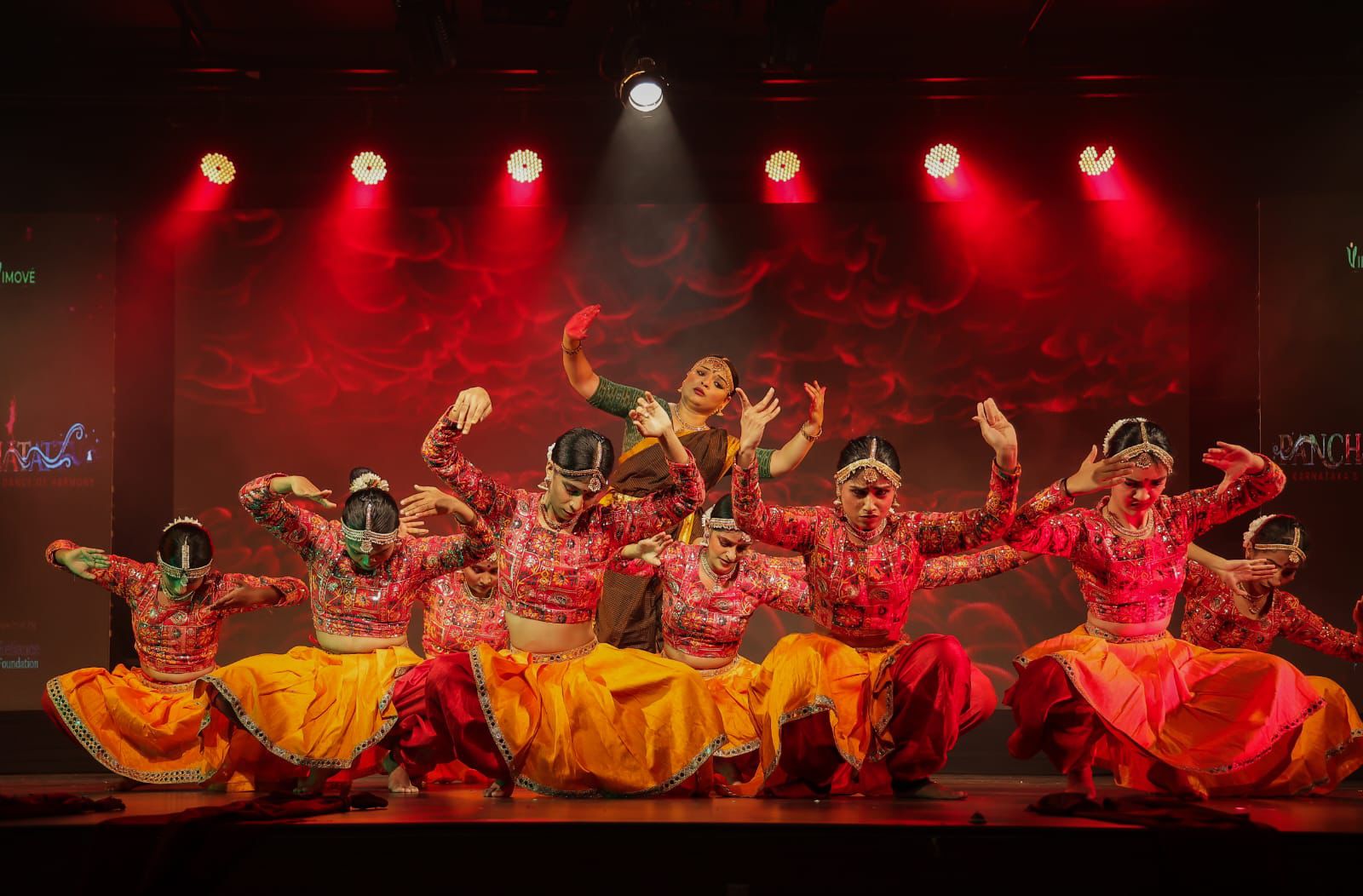
Education, at its core, is not merely the transmission of information but the shaping of human character — a delicate process that molds intellect, emotion, and identity. In this evolving landscape, the performing arts stand as one of the most powerful and underappreciated pillars of holistic education. Dance, drama, music, and storytelling have, for centuries, been tools through which children learned not only to express but to understand. At Vimove Foundation, this belief lies at the heart of our mission — to build not just smarter students, but more complete human beings.
The Vimove Foundation was founded with a vision to bridge the learning gap in India’s government schools by integrating technology, creativity, and community participation. Through our flagship initiative, Project E-Shaale, we have empowered schools across Karnataka with smart classrooms, digital learning tools, and access to innovative educational content. Yet, we recognize that true education cannot be confined within the walls of a classroom or the boundaries of a screen. It must include a space where children can express emotion, cultivate imagination, and learn the art of connection. This is where the performing arts become not an accessory to education, but an essential component of it.
The Performing Arts as an Essential Education
Performing arts play a profound role in shaping a student’s life by nurturing confidence, creativity, and cultural belonging. When a child steps onto a stage — be it to recite a poem, act in a play, or perform a dance — something remarkable occurs. The act of performance transforms the ordinary learner into a storyteller, a leader, and an observer of human emotion. It builds resilience, as they overcome fear; empathy, as they inhabit another’s experience; and communication skills that no textbook alone can impart. The stage becomes an extension of the classroom — a space of exploration, vulnerability, and growth.
The Performing Arts as a Bridge between Tradition and Innovation
- In the context of Karnataka, these values resonate deeply. The Karnataka Rajyotsava, celebrated each year on the 1st of November, reminds us of the state’s unification, its linguistic pride, and its rich artistic heritage. On this day, schools, communities, and cultural institutions come alive with performances that celebrate the language, dance, and music of the land. Folk forms like Yakshagana, Dollu Kunitha, and Veeragase embody the rhythm and resilience of Karnataka’s people. When students participate in such performances, they are not only learning the choreography or dialogue — they are inheriting the legacy of a civilization that has always valued art as education and education as art.
- At Vimove Foundation, we see the performing arts as a bridge between tradition and innovation. Through Project E-Shaale, our digital infrastructure is already transforming the way students in government schools learn core subjects like science, mathematics, and languages. But we also see technology as a platform that can amplify cultural expression. Digital classrooms can showcase student performances, preserve folk traditions through recorded storytelling, and even connect classrooms across districts for virtual cultural exchanges. In this way, we envision a modern Karnataka where technology and tradition do not compete, but coexist — each enriching the other.
- Moreover, performing arts foster inclusivity. For many students from rural and underprivileged backgrounds, the stage becomes an equalizer. It does not matter who they are or where they come from; what matters is their expression, their voice, and their willingness to share a story. In several schools where Vimove Foundation has implemented Project E-Shaale, teachers have observed that students who once hesitated to speak in class found confidence through performance. A child who might struggle academically can excel in a skit or a musical piece, discovering a new sense of self-worth. This transformation, subtle yet profound, reinforces our belief that education must address both the mind and the spirit.
The Karnataka Rajyotsava celebrations this year remind us why these values matter. As schools across the state prepare their stages with decorations of red and yellow, and as students rehearse folk dances or patriotic plays, we are reminded that performing arts are more than cultural activities — they are acts of identity and unity. For a child performing “Jaya Bharata Jananiya Tanujate” on stage, the lyrics are not just words but a declaration of belonging. This is the kind of emotional learning that leaves a mark long after academic lessons are forgotten.
The Performing Arts as a Catalyst for Digital Learning
Vimove Foundation continues to advocate for a model of education that celebrates both intellect and imagination. We believe that integrating performing arts into school programmes under Project E-Shaale can deepen the impact of digital learning. Imagine a smart classroom where a lesson on environmental conservation concludes with students performing a short skit about protecting their local rivers. Or a Kannada language class that ends with a musical recital of poetry. Such moments make learning tangible, personal, and memorable. They embody the essence of Karnataka’s cultural ethos — one that values creativity as a form of knowledge.
- In shaping the future of education, it is crucial that we do not abandon the past. Performing arts connect us to the wisdom of generations before us — to stories told under temple courtyards, to dances performed in village squares, to songs that carried both history and hope. As we build modern schools equipped with screens and software, we must ensure that the sound of traditional drums and the rhythm of native language still echo through the halls. Progress should not silence heritage; it should give it a louder, clearer voice.
- Ultimately, the performing arts teach children something that no exam can measure — how to feel, how to listen, and how to be human. They prepare them not just for a career, but for life itself. At Vimove Foundation, we see every student as a performer in their own right — learning, growing, adapting, and expressing. Through initiatives like Project E-Shaale, and through the celebration of Karnataka’s cultural identity, we reaffirm our commitment to an education system that values knowledge and creativity equally.
- As Karnataka celebrates its Rajyotsava, let us celebrate the young voices, the dancers, the storytellers, and the dreamers who will carry its spirit forward. For in every child who dares to perform, there lies the promise of a brighter, more expressive, and more compassionate tomorrow.
Through these initiatives, we aim to turn awareness into accountability, and accountability into long-term change.