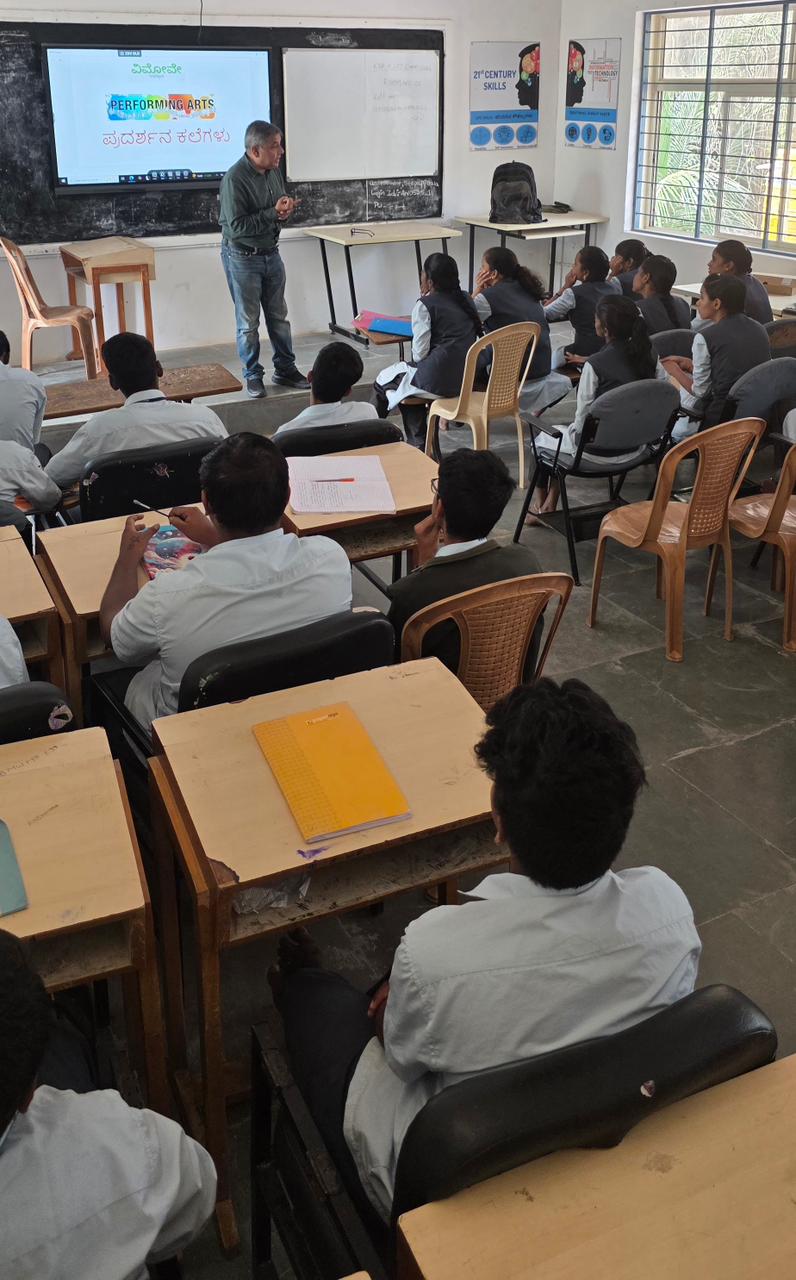
Government schools in India are often spoken about as engines of equity and access—particularly in conversations around urban education and digital inclusion. However, the reality we encountered on the ground was far more layered, humbling, and deeply human.
When we launched initiatives such as Project E-Shaale, along with Tab-Lab, Pragati Shaale, and Hasiru Shaale, we envisioned classrooms transformed by technology, empowered students, and vibrant learning environments. What unfolded instead reshaped our assumptions, challenged our methods, and strengthened our understanding of what meaningful, long-term change truly requires.
1.Technology Alone Isn’t the Solution — It’s Only the Starting Point
Our early interventions focused on introducing interactive boards and digital tools, driven by the belief that access would naturally lead to better outcomes. In reality, access without readiness often led to hesitation.
Teachers were open to innovation, but many lacked the time, training, or ongoing support needed to integrate technology into everyday teaching. Students encountering digital tools for the first time were often cautious rather than immediately curious.
What we learned:Technology is effective only when supported by consistent teacher capacity-building, classroom-level handholding, and time for gradual adoption. Devices enable possibility—but people enable impact.
2.Teacher Confidence Determines Classroom Success
While students are at the centre of learning, teachers are the backbone of sustainable change. We underestimated how stretched government school teachers already are—balancing large class sizes, administrative responsibilities, and evolving curriculum expectations.
Short-term training sessions proved insufficient. Impact improved significantly only when teachers were involved as collaborators, not recipients.
Lasting educational change begins when teachers feel supported, respected, and confident enough to experiment.
3.Holistic Learning Creates Deeper Engagement Than Content Delivery
We initially approached classrooms with a technology-first lens. Over time, we realised that what resonated most with students went beyond instructional content.
Students responded strongly to:
Through Project E-Shaale, sessions on climate awareness, financial management, and future pathways became some of the most impactful classroom experiences—not because they were complex, but because they were meaningful
4.Infrastructure Challenges Shape Outcomes More Than We Anticipated
Infrastructure gaps often appear minor on paper but have significant consequences on the ground. Inconsistent electricity, non-functional equipment, and limited maintenance support frequently disrupted learning continuity.
Even basic gaps—such as access to clean water or functional sanitation—directly affected attendance and concentration.
Through Pragati Shaale, we learned that infrastructure is not a secondary concern. Without stable learning environments, even the strongest programs struggle to sustain impact.
5.Students Are Motivated — They Are Often Just Under-Exposed
A common misconception surrounding government school students is a lack of motivation. Our experience consistently challenged this narrative.
When students understood why they were learning something—and how it connected to future opportunities—their engagement shifted visibly. Confidence grew when they were encouraged to lead, explore, and question.
Students do not lack ambition; they often lack exposure. Purpose unlocks participation.
6.Community Trust Is Built Slowly, But It Changes Everything
Early progress accelerated only after trust was established—with teachers, parents, and local communities. Listening before acting proved far more powerful than arriving with ready-made solutions.
Parents began engaging more actively. Teachers shared honest feedback. Students felt seen.
Once communities viewed us as partners rather than outsiders, programs became more effective and resilient.
7.Partnerships Scale Impact — Relationships Sustain It
Collaborations with organisations such as Finastra, alongside local stakeholders, reinforced an important lesson: scale comes from resources, but sustainability comes from relationships.
One-time installations have limited value. Ongoing engagement, shared ownership, and mutual respect are what create long-term outcomes.
True partnerships treat communities as co-creators, not beneficiaries.
8.Progress Is Often Quiet Before It Is Visible
Initially, we measured success through installations, sessions, and reach. Over time, our definition evolved.
Impact looked like:
- a student staying back after school to explore a digital lesson,
- a teacher confidently modifying her teaching approach,
- a parent expressing hope that their child might pursue higher education.
- Transformational change rarely announces itself—but it endures.
How These Lessons Shape Our Work Today
To date, Vimove Foundation has:
-
engaged with 30+ government schools,
Technology enhances teaching; it does not replace the teacher. - reached 15,000+ students,
- and impacted over 250,000 citizens through education and awareness initiatives.
- While these numbers reflect scale, we recognise that true impact lies beyond metrics.
We measure success when:
teachers feel empowered rather than overwhelmed,
students begin to imagine futures they had never considered,
schools evolve into spaces of curiosity, confidence, and possibility.
Moving Forward
These lessons have reshaped how we design and implement every program. We now prioritise listening over assumptions, adaptation over rigidity, and long-term relationships over short-term outcomes.
Working in government schools has taught us that meaningful change is slow, complex, and deeply relational—but also profoundly rewarding.
A Note of Gratitude
To our partners, volunteers, teachers, students, and communities—thank you.
Your resilience, openness, and aspirations continue to guide our work.
As we move forward, we remain committed to learning, unlearning, and growing—together.