Cities today are not short of climate awareness. They are short of climate participation.
Across the world, institutions have invested heavily in campaigns that encourage citizens to conserve resources and adopt sustainable practices. While these efforts have increased visibility and understanding, they have not resulted in change at the scale required. The limitation lies not in intent, but in structure.
Awareness, when not supported by systems that enable participation, remains passive and short-lived.
From Awareness to Participation
Urban transformation does not occur through messaging alone.
Cities evolve when systems are designed in a way that allows people to actively participate in them. Whether in waste management, water conservation, or mobility, meaningful change happens when citizens are embedded within the system, rather than positioned outside it.
Information may influence behaviour temporarily, but participation builds consistency. It creates ownership, accountability, and long-term engagement. Without this shift, even the most well-designed campaigns fail to translate into lasting outcomes.
Bengaluru’s Reality
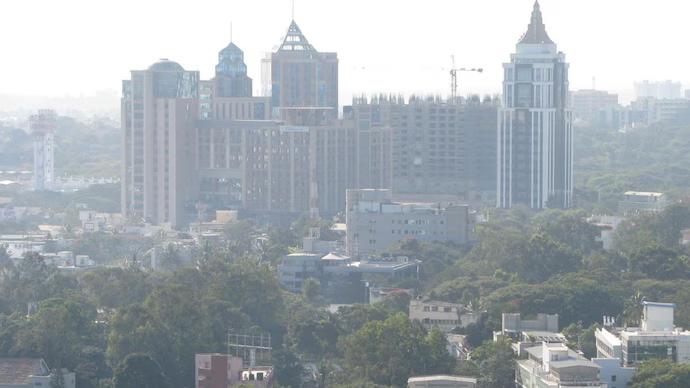
Bengaluru is no longer approaching a climate challenge. It is already experiencing one.
The city is facing increasing pressure on its water systems, growing complexity in waste management, and persistent inefficiencies in mobility. These challenges are interconnected and require coordinated responses across sectors.
Despite this urgency, climate engagement in Bengaluru continues to be largely fragmented. Many initiatives remain short-term, issue-specific, and disconnected from one another. As a result, citizens are aware of the problems, but remain largely excluded from the systems designed to address them.
This disconnect limits both scale and impact.
The Missing Link
What Bengaluru lacks is not concern, but a structured framework for participation.
The city requires models that enable continuous engagement, where citizens are able to contribute meaningfully over time, and where individual actions accumulate into measurable outcomes. Participation must move beyond symbolic gestures and become an integral part of how urban systems function.
This requires collaboration across stakeholders, alignment between institutions, and platforms that sustain engagement over time.
Building a Movement: The ALTERNATIVE Approach
The ALTERNATIVE initiative by Vimove Foundation has been developed to address precisely this gap.
It moves beyond isolated campaigns and instead builds a multi-stakeholder, participatory movement for Bengaluru. Its approach recognises that sustainable cities are shaped not by a single institution, but through coordinated action between citizens, government bodies, and private organisations.
A key aspect of this model is its ability to work in alignment with public institutions, including collaboration with the Government of Karnataka and other urban stakeholders. This ensures that citizen engagement is not disconnected from governance, but actively contributes to it.
By linking grassroots participation with institutional frameworks, ALTERNATIVE strengthens both relevance and impact.
What This Looks Like in Practice
Citizen Engagement and Input
ALTERNATIVE has engaged a wide cross-section of Bengaluru’s population to capture insights rooted in lived experience. This includes inputs from residents, professionals, and community groups, ensuring that sustainability discussions reflect the realities of the city.
These insights contribute to broader conversations involving policymakers and institutions, helping bridge the gap between planning and implementation. This creates a feedback loop where citizen perspectives inform decision-making, and decisions remain grounded in actual needs.
The Impactathon
The Impactathon introduces a model where climate action becomes part of everyday behaviour.
Participants engage in sustained activities such as walking and running over a defined period, contributing to a collective environmental outcome. The initiative transforms individual effort into shared impact, reinforcing the idea that small, consistent actions can scale when aggregated.
More importantly, it shifts climate action from being occasional to habitual, embedding it into daily life rather than limiting it to events.
Linking Action to Tangible Outcomes
A defining feature of the ALTERNATIVE model is its ability to connect participation with measurable results.
Citizen engagement contributes to tangible outcomes, including support for sustainability initiatives and broader environmental impact. This ensures that action is not symbolic, but meaningful and visible.
When individuals are able to see the direct impact of their participation, engagement becomes more sustained, intentional, and scalable.
Cross-Sector Collaboration
ALTERNATIVE is not limited to citizen engagement alone. It actively brings together government agencies, private sector organisations, and civic groups to create a unified approach to climate action.
Such collaboration is critical in a city like Bengaluru, where challenges span multiple systems and jurisdictions. By aligning efforts across stakeholders, the initiative avoids fragmentation and enables more coherent, large-scale impact.
This multi-stakeholder approach strengthens both execution and accountability.
Culture and Community
ALTERNATIVE also recognises that long-term behavioural change cannot be driven by information alone.
By integrating storytelling, community engagement, and shared experiences, it builds a sense of collective identity around climate action. This helps embed sustainability into everyday life and social norms, making it part of how communities function rather than an external expectation.
Cultural integration ensures that change is not only adopted, but sustained.
The Bengaluru Climate Summit – Alternative 26
The Bengaluru Climate Summit – Alternative 26 represents the next stage of this movement.
It is designed as a convergence platform that brings together citizens, policymakers, businesses, and innovators to address Bengaluru’s core urban systems, including water, waste, energy, and mobility.
Importantly, the summit builds on existing collaborations, including engagement with institutions such as the Government of Karnataka, ensuring that discussions are aligned with governance and implementation pathways.
Rather than functioning as a standalone event, it creates continuity by linking dialogue with action, and participation with long-term engagement.
A Call to Participate
The significance of Alternative 26 lies in what it asks of the city.
It is not simply an invitation to attend, but an opportunity to engage in shaping Bengaluru’s future. The responsibility of building a sustainable city cannot rest solely with governments or organisations. It must be shared by its citizens.
Participation is no longer optional. It is essential.
Conclusion
The climate challenge facing Bengaluru is not a lack of awareness, but a lack of structured participation.
Campaigns may initiate conversations, but they rarely sustain them. Movements create continuity, alignment, and collective ownership.
Bengaluru does not need more messaging.
It needs deeper engagement.
The question is no longer whether people care.
It is whether they will act, consistently and together.
Alternative 26 is an opportunity to make that shift.